Compare
Every tool is goodat something.
Here is where Ritemark fits, and where the tool you already use is the better answer.
Free and open source. Your documents are markdown files in your own folders.

ChatGPT Desktop
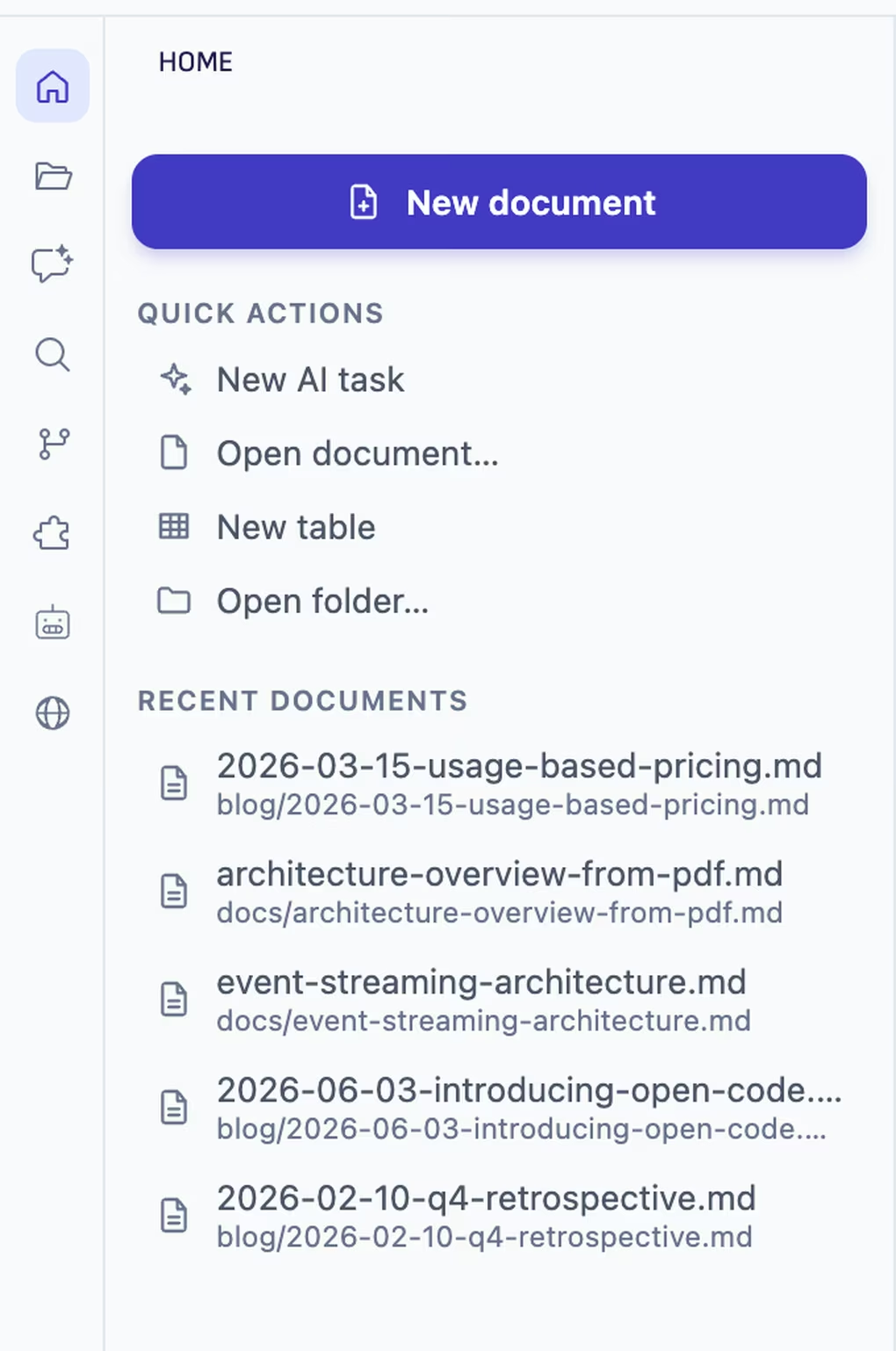
One window for each folder.
ChatGPT Desktop is the better all-round assistant. Ritemark opens each folder in a window of its own, with that folder's conversations, and Codex works there on your ChatGPT plan.

Claude Desktop
Your setup lives in the folder.
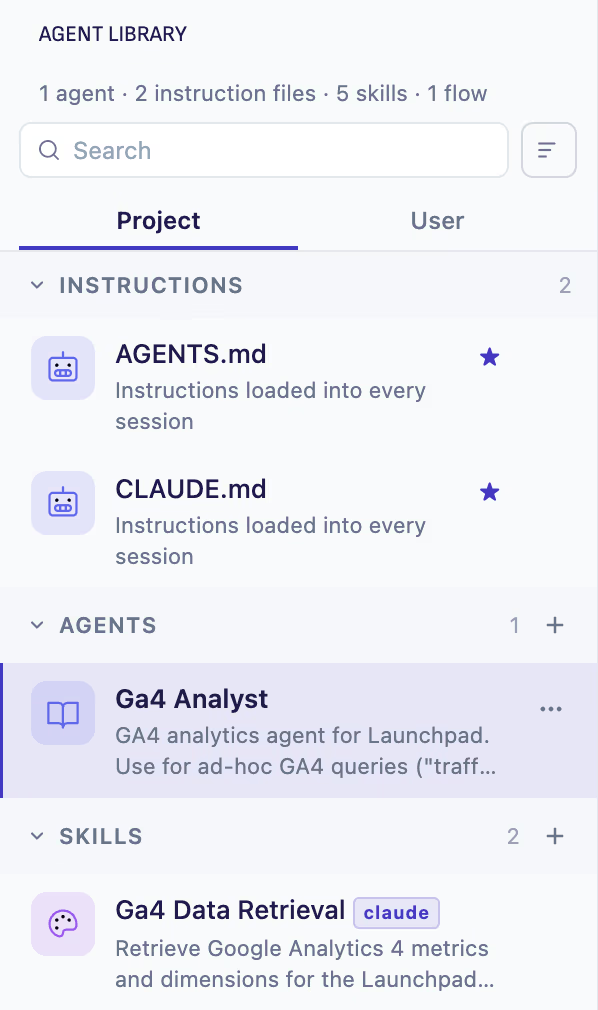
Claude Desktop is the better place to think out loud and hand off tasks across your apps. In Ritemark, the instructions, agents and skills for a project are files in its folder, and they open with it.
Obsidian
An agent in the sidebar, not another app.
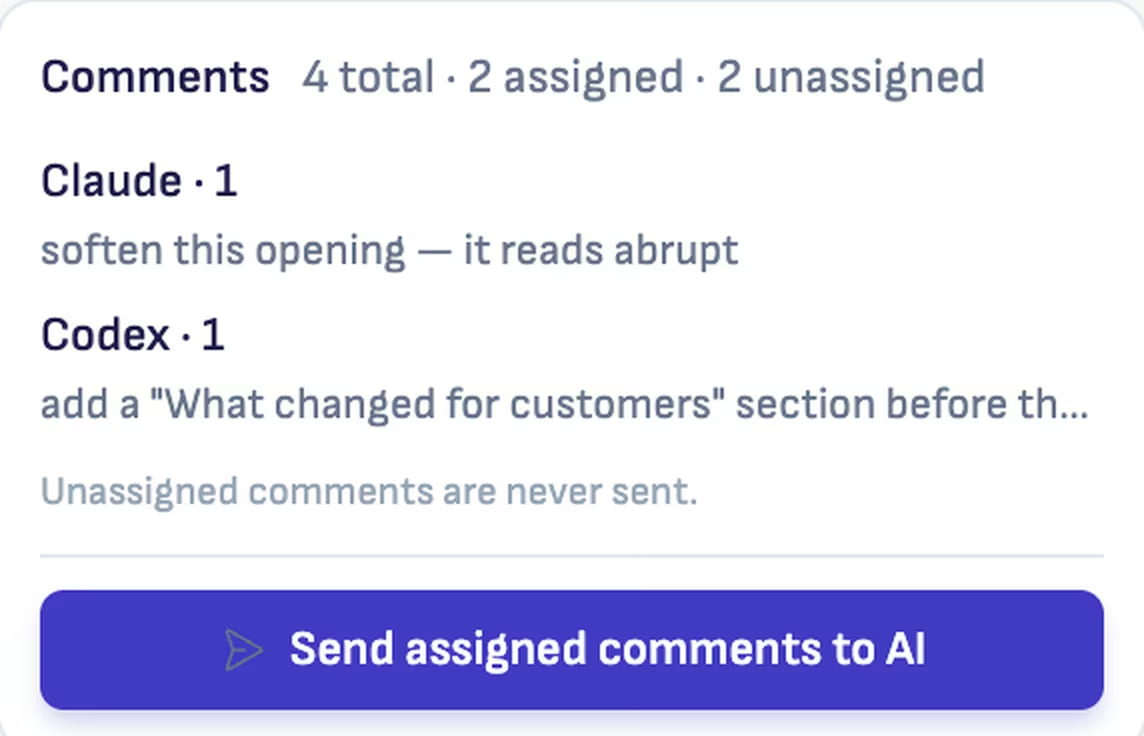
Both keep plain markdown in your own folders. Obsidian is the better second brain; Ritemark is built around finishing the document.
Notion
No export, because nothing was locked in.
Notion is the better shared workspace. Ritemark keeps every document as a file on your computer, so leaving is not a migration project.
iA Writer
The calm page stays.
iA Writer is the more focused place to write a draft. Ritemark keeps that page, and puts the recordings, data and agents around it.

VS Code
The same engine, pointed at prose.
Ritemark is built on VS Code OSS. If you write code, keep VS Code. If your deliverable is a document, this is the same power without the developer furniture.

What holds in every comparison
Your files stay files
Plain markdown in your folders. No Ritemark account, no Ritemark cloud.
Your own AI account
Your ChatGPT or Claude account, or your own API keys. What the agent reads goes to that provider.
Mac and Windows
A direct download on Mac, the Microsoft Store on Windows. Free and open source.
Try it beside the tool you use now.
Free and open source.