The follow-up nobody has time for
Every trainer knows the promise made at the end of a session. "I will send you a summary." Sometimes a slide deck goes out instead, because the deck already exists and the summary does not. The questions people actually asked, the example that finally made it click, the thing you said differently the third time because the first two did not land, all of that stays in the room.
The gap is not effort. It is that writing the handout means reconstructing two hours from memory, days later, when the next group is already booked.
Record the session you were running anyway
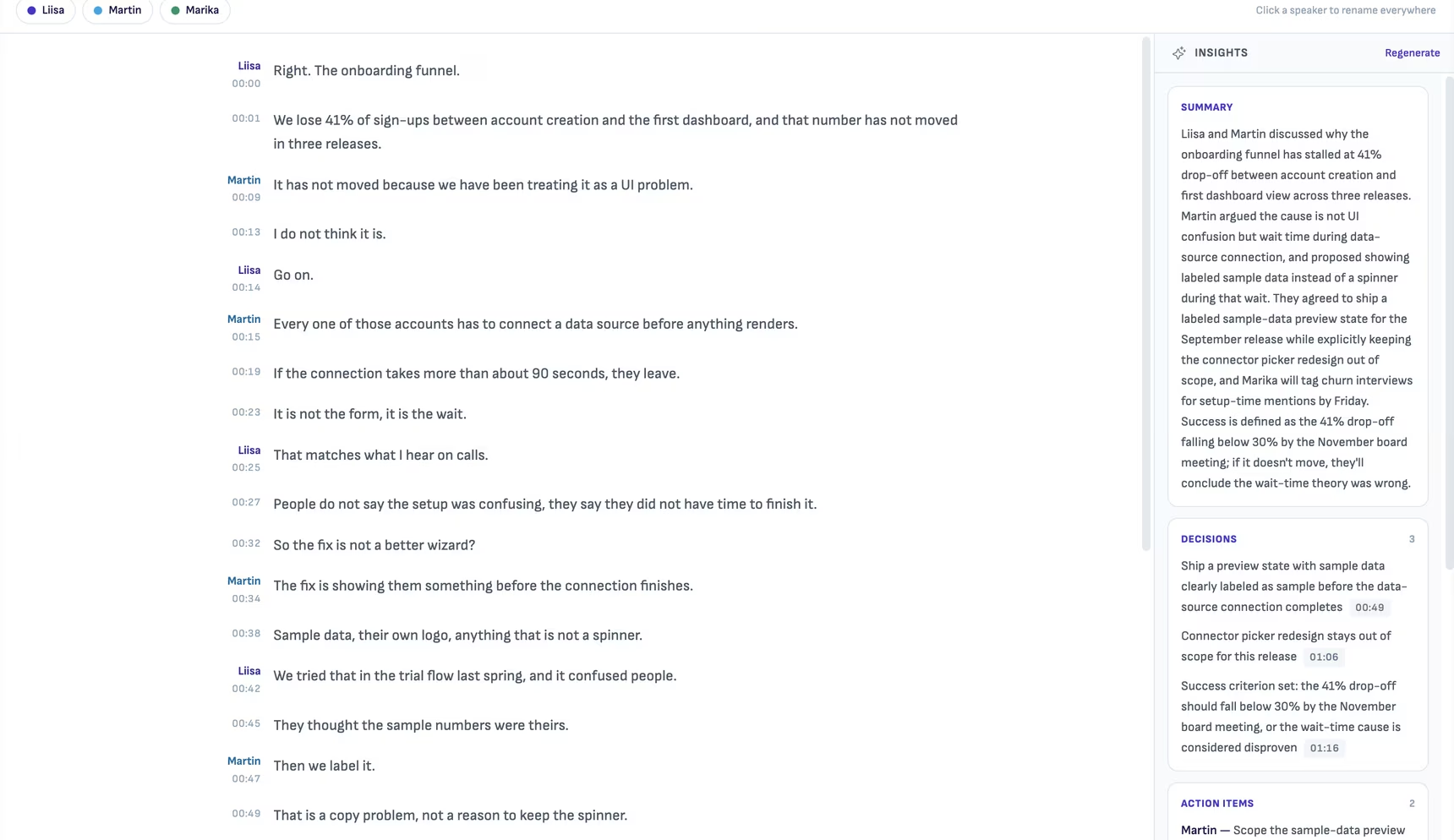
Put the recording in the project folder with your lesson plan. Ritemark transcribes it into a document that sits beside the plan, with speaker labels and a timestamp on every line, so it reads like minutes rather than a wall of text.
From there Insights gives you the summary, the decisions and the action items, each with the moment it happened. For a workshop that means the agreements the group reached, in their own words, with the timestamp to check if someone remembers it differently.
Then write the handout from what was said
This is where the agent earns its place. With the transcript and your lesson plan both in the folder, you can ask for the handout in plain words: the three things the group struggled with, the worked example from the second hour, the questions that came up twice. The agent reads the files in your folder and writes into the document you have open.
The same material gives you the rest of the follow-up. Exercises for the next session, built from what the group actually got wrong rather than what you expected them to. A short email with the two links you promised. A brief for the next group, noting which part of the plan took twice as long as it should have.
If you run the same course repeatedly, save the method once. A skill file in the project describes how your handouts are structured, and the agent follows it next time instead of you re-explaining.
What this costs you
The honest version: a recording is audio of people talking, often including people who did not expect to be quoted.
On a Mac with Apple silicon, transcription runs on your own machine and the audio never leaves it, but it will not separate speakers, so a multi-voice workshop comes back as one continuous transcript. ElevenLabs does separate speakers and costs roughly a cent a minute, and it works by uploading the audio under your own key. Ritemark shows you which one is about to happen, with the cost, before it starts.
For a session with participants in the room, that choice is worth making deliberately. Tell people they are being recorded, and pick the engine that matches what you told them.
Why a folder rather than a tool
The lesson plan, the recording, the transcript, the handout and the exercises end up as files in one folder on your computer. Next year, when you teach the course again, you open the folder rather than hunting through a tool's archive. Nothing expires, nothing needs exporting, and the material is yours in the plainest sense.