Two Different Jobs
ChatGPT Desktop and Ritemark both put an AI agent on your computer, and both can use your ChatGPT account. They are built for different work. ChatGPT Desktop is an assistant: you ask, and it answers, researches, draws, talks, and more and more often acts across your apps. Ritemark is a writing app. The document sits in the middle of the window, and the agent works on the files in your folder while you stay the author.
This page is about the second kind of work. If you want answers, images or a voice to think with, ChatGPT Desktop is the better tool. If your work ends as a document for someone else, read on.
What ChatGPT Desktop Does Well
Since July 2026 the ChatGPT app for Mac and Windows has three modes in one window: Chat, Work and Codex. Chat is the assistant you know, with voice, image generation and research. Work is an agent for longer tasks that uses your files, apps and websites, and it reaches Gmail, Slack, Google Drive, SharePoint and many other services through plugins. Codex is OpenAI's coding agent. Projects group chats, files and instructions, and a local project can point at folders on your computer.
For a team that lives in Gmail, Slack and Drive and wants an agent to pull a deck together across them, that is hard to beat, and Ritemark does not try to.
Where Ritemark Is Different
A window is a folder
In Ritemark, a window belongs to one folder. The title bar names it, the Folder view shows its files, and the AI sidebar lists only the conversations saved in it. To work on another project, choose New Window from the File menu and open that folder there. You get a second workspace next to the first, and none of the first client's conversations are in it. The New Window guide shows how.
ChatGPT Desktop organises the same work differently. Projects and chats sit in one sidebar, and you switch between them there. It has a New Window command as well, but a project is still an item in that sidebar rather than a window of its own.
The setup is files you can read
A Ritemark project carries its setup as plain files. AGENTS.md and CLAUDE.md at the root of the folder are loaded into every agent session in that window. Agents and skills live in the folder's .claude and .agents folders, and the Agent Library shows them and lets you create and edit them in a form instead of YAML. Because they are files, they go wherever the folder goes, and a colleague who opens the folder gets the same setup.
In ChatGPT, a project's instructions are kept in your ChatGPT account. Codex reads AGENTS.md from the folder in both apps, which makes that one file a good place to start.
You edit the document next to the agent
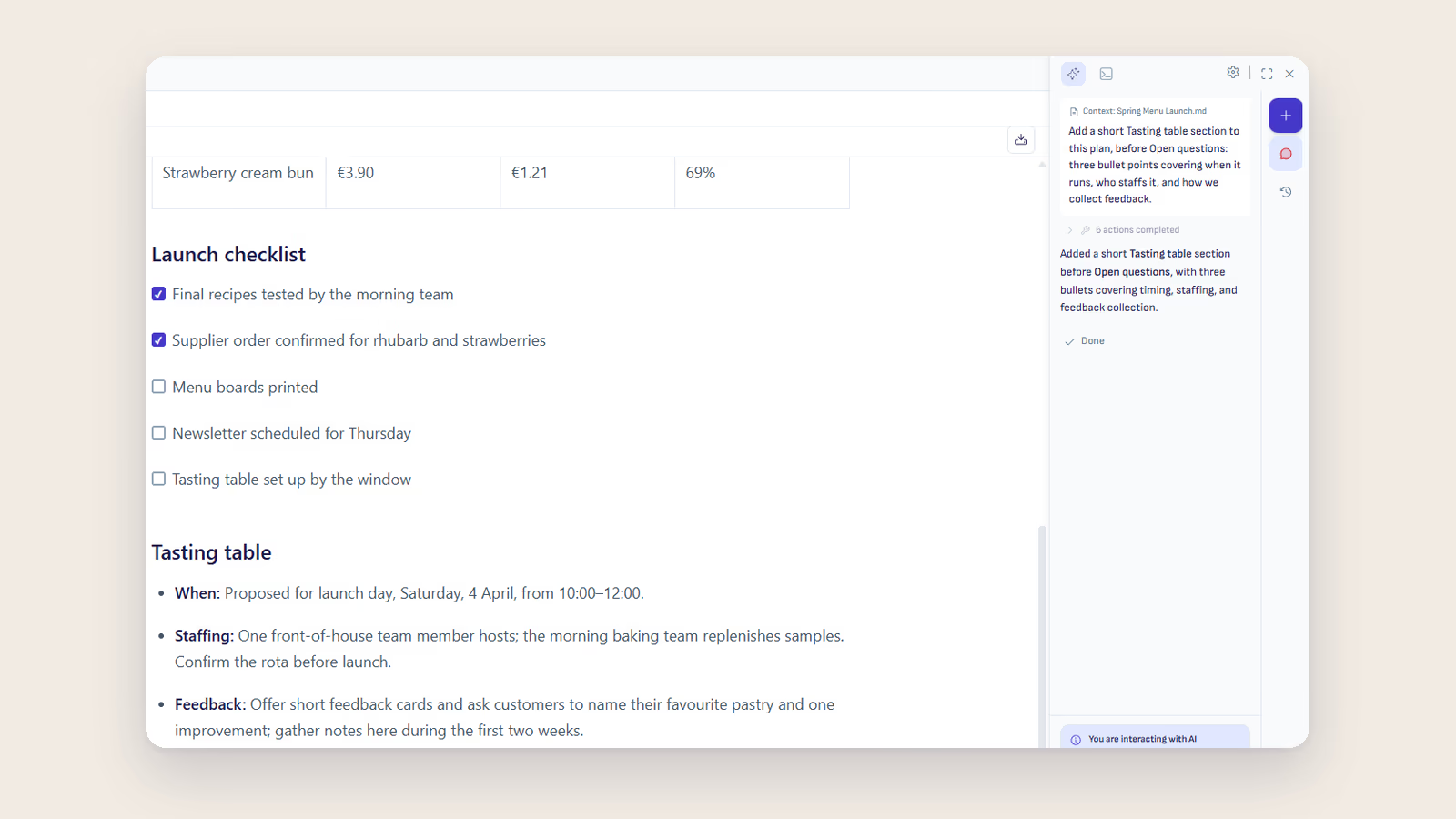
The agent in Ritemark works in the file you have open, and its changes land in the document while you watch. You keep writing in a visual editor where headings and tables look like what they are. Leave a comment on a paragraph, write @codex in it, and the comment goes to the agent as a task. Switch on Plan only, and Codex shows its plan before it changes anything.
Codex and Claude, not one or the other
Ritemark runs Codex with your ChatGPT account, Claude Code with a paid Claude plan or an Anthropic API key, and OpenCode with your own API keys. You choose the agent for each conversation, and you can change it halfway through: the next message goes to the other agent with the earlier ones as context. ChatGPT Desktop runs OpenAI's models.
Where They Meet
Both run Codex with your ChatGPT account, and OpenAI includes Codex in every ChatGPT plan, the free one with tighter limits. The Ritemark app itself is free and open source, and there is no Ritemark account. Whatever the agent reads from your folder goes to OpenAI under your account and its terms, as it does in ChatGPT.
Which One to Use
Use ChatGPT Desktop when the job is a conversation, a quick answer, an image, or a task that runs across your cloud apps. Use Ritemark when the job is a document that lives in a folder and has to be right: a report, a course, a proposal, documentation. Many people will use both, and the ChatGPT plan you already have works in each.
Checked against the ChatGPT desktop app on 23 September 2026. OpenAI updates it often.
FAQ
Is Ritemark a ChatGPT Desktop alternative?
For writing documents in your own folders, yes. Ritemark runs Codex with your ChatGPT account inside a writing app. For voice, images, research and work across your cloud apps, ChatGPT Desktop is the better choice.
Can I use my ChatGPT subscription in Ritemark?
Yes. Sign in to Codex with your ChatGPT account in Ritemark's AI sidebar. OpenAI includes Codex in every ChatGPT plan; the free plan has tighter usage limits.
Can ChatGPT Desktop open more than one window?
Yes, it has a New Window command. A Ritemark window goes further: it belongs to one folder, with that folder's conversations, instructions, agents and skills.
Does Ritemark work with Claude too?
Yes. Ritemark runs Claude Code with your Claude plan or an Anthropic API key, and OpenCode with your own API keys. You pick the agent for each conversation.
Is Ritemark free?
The app is free and open source for Mac and Windows. The AI runs on your own account: Codex with your ChatGPT plan, Claude Code with a paid Claude plan or an Anthropic API key, and OpenCode with your own API keys.