The third time you teach a course is when you finally understand it. You know which exercise needs ten more minutes, which slide makes people look at their phones, and which question will come up right after lunch. You tell yourself you will fix the plan before the next run.
Then the next run comes around four months later. The lesson plan is exactly as it was, and you remember that something about module two did not work, but not quite what.
What gets lost between runs
Most trainers I know keep some kind of notes after a session. A few lines in a notebook on the train home, a voice memo, an email to themselves. The notes are honest and short, and that is the problem. "Module 2 too long" does not tell you whether the explanation was unclear or the exercise was too big. By the time you sit down to revise, the detail that would tell you is gone.
The group did tell you, though. They told you in the questions they asked, and in the moment somebody said "wait, so this is the same as the thing from this morning?". All of that was said out loud, and none of it made it into the notes.
Keep every run in the course folder
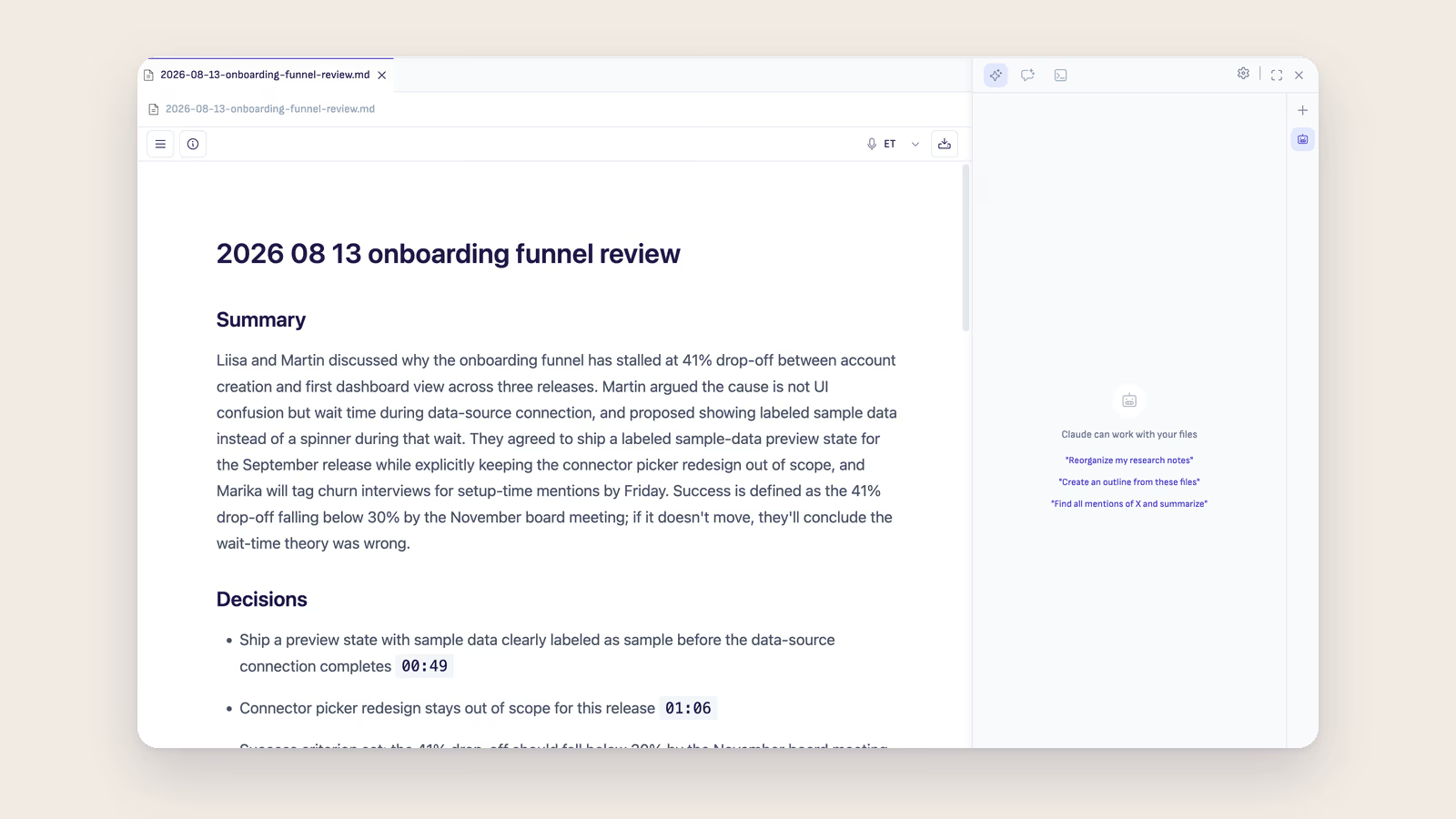
The simplest change is to record the session and keep what was said next to the lesson plan. In Ritemark you add the recording in Transcribe and it comes back with a timestamp on every line. Insights pulls out a summary, the decisions and the action items, and Save to document turns the lot into a plain Markdown file in the folder.
One course, one folder. The lesson plan and the exercises sit next to one document per run, named after the group, so the September group's session is next to June's. Nothing clever, just files you would otherwise have scattered across a notes app and a downloads folder.
A word about the recording itself. On a Mac with Apple silicon, transcription runs on your own machine and the audio does not leave it, but it will not tell speakers apart. ElevenLabs does separate speakers and costs roughly a cent a minute, and the audio is uploaded under your own key. Ritemark shows which one is about to run, with the cost, before it starts. Whichever you pick, tell the group they are being recorded and why.
Before the next run, ask across all of them
This is where having three runs in one folder starts to pay. Open the folder in Ritemark, and the agent in the sidebar can read every file in it. Instead of rereading three transcripts, you ask.
"Look at the three session documents. Where did we run over time, and which questions came up in more than one group?" Or more pointed: "Module two ran long every time. From what people asked, was it the explanation or the exercise?" The answers come with timestamps, so you can go back to the moment and hear it for yourself before you believe it.
Then ask for the change, not just the finding. "Suggest edits to the lesson plan for module two, based on this." If you use Claude Code or Codex, switch to Plan only first. The agent reads the files and shows what it would change and where, and nothing is edited until you agree. It is a good moment to say "keep the opening story, it works even when it runs long".
Save how you build the handout
Every run ends with the same follow-up work, and the handout is the biggest part of it. If you have written that handout four times, you have a method, even if it only lives in your head.
Write it down once as a skill. In the Agent Library there is a New skill button, and the skill is a short Markdown file in the project that says how your handouts are built: what goes first and how long the exercises are. Claude Code keeps skills in .claude/skills/ and Codex in .agents/skills/, and the library shows both. After that, "write the handout for the September group" is enough, and the agent follows your structure instead of inventing its own.
What the folder does not know
A transcript only has what was said. It does not have the long silence after a question, or the three people who stopped taking notes at eleven. Some of the most useful signals in a room never become words, and an agent reading documents cannot see them. Your own notes still matter, and they are better written into the same folder than into a notebook.
The agent will also be confidently wrong sometimes. If it says a question came up in every group, check the timestamps. That takes a minute, and it is still far quicker than reading three hours of transcript yourself.
What you get is a course that remembers its own history. The next time you teach it, the plan has already changed because of the last three groups, and the notes that would have been lost are sitting in a folder you can open.
The trainers page walks through turning one recording into a handout, and the Transcribe guide covers engines, speakers and Save to document.