The gap between the recording and the deliverable
Anyone who runs workshops or interviews for a living knows the gap. The session went well, the recording is two hours long, and the client is waiting for a summary. Somewhere between the audio file and the document there is an evening of scrubbing back and forth, trying to remember whether the decision about the November deadline came before or after the coffee break.
Most transcription tools stop at the transcript. You get a wall of text, usually without knowing who said what, and the work of turning it into something a client can read is still entirely yours.
What Ritemark does with the recording
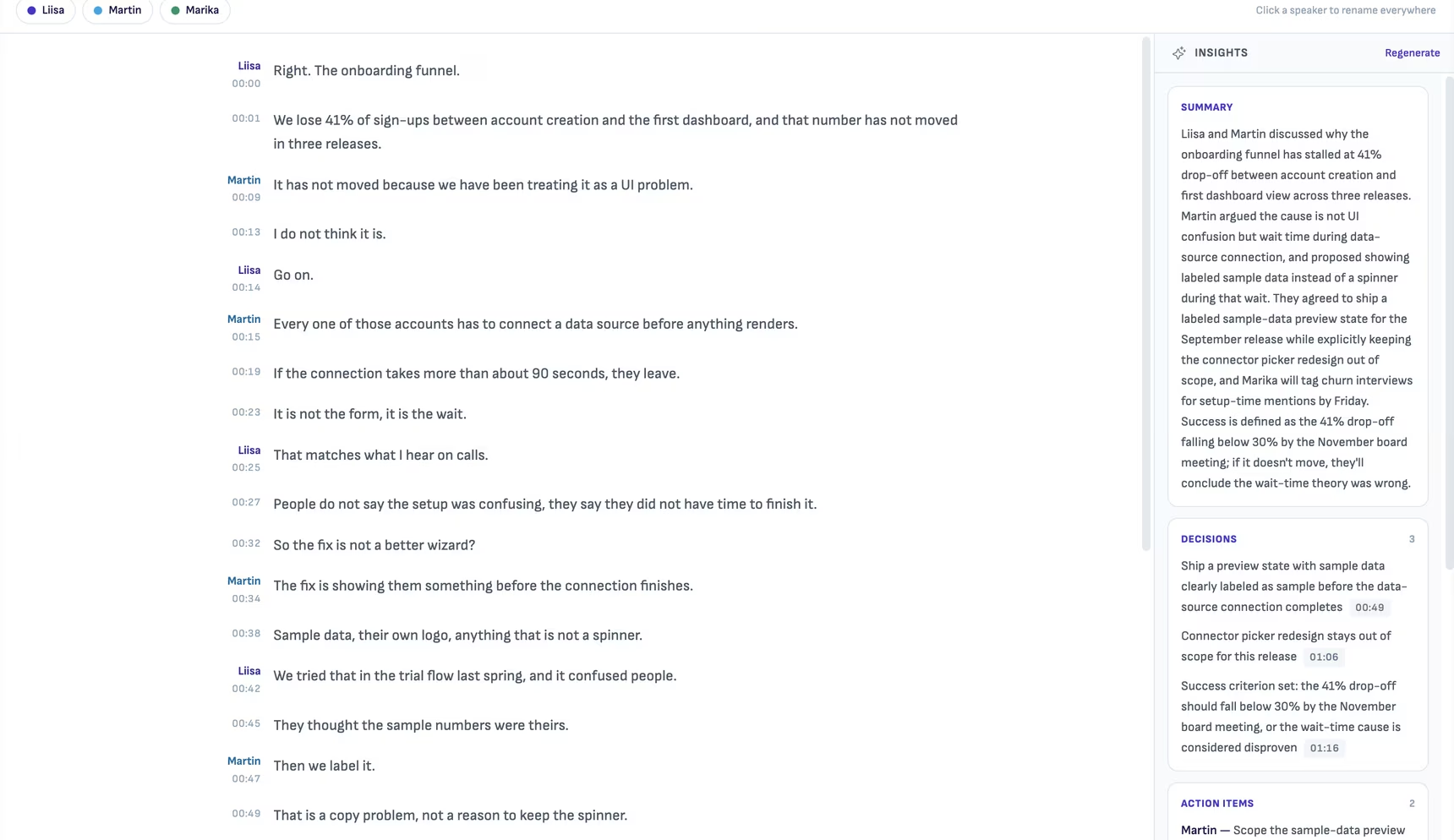
Add the recording to a project and Ritemark transcribes it into a document that sits in the same folder as your notes and your draft. The transcript carries speaker labels and timestamps, so you can read it the way you would read minutes, and click a line to hear that moment.
From there, Insights pulls out a summary, the decisions, and the action items. Each decision carries the timestamp where it was made, which matters more than it sounds: when a client disputes what was agreed, you can play the twelve seconds where it was agreed instead of arguing from memory.
The result is a markdown file. It goes into your findings document, your proposal, or your follow-up email, the same way any other text would.
Where the audio goes
This is the part worth reading carefully, because the two options are genuinely different.
On a Mac with Apple silicon, transcription runs on your own machine using Whisper. The audio never leaves the computer, it costs nothing, and it does not separate speakers. For a single-voice recording, a lecture or a voice memo, that is usually what you want.
The other option is ElevenLabs Scribe, which does separate speakers and costs around a cent a minute at the time of writing. It works by uploading your audio to ElevenLabs, under your own API key and their terms. Ritemark tells you this in the dialog before it starts, with the estimated cost, because a recording of a client session is not something to upload by accident.
Neither option is "private AI" in the marketing sense. One keeps the audio on your machine and gives you less; the other sends it away and gives you more. Which one fits depends on the recording, and you choose per recording rather than once in a settings screen.
Who this is for
Consultants turning workshops into findings. Trainers turning a session into a handout for the people who attended. Researchers working through interviews. Anyone whose real deliverable is a document, and whose recording is just the raw material for it.