The product manager's writing problem
You get off a customer call with three pages of notes and a head full of ideas. Now you need to turn that into a PRD that engineering can actually build from. User stories, acceptance criteria, edge cases, dependencies, scope boundaries.
Most PMs open a Notion doc or Google Doc and start typing. Somewhere around page two, they paste their notes into ChatGPT in a browser tab, ask for help structuring the requirements, copy the output back, rewrite half of it, then go back for another round. Context gets lost every time you switch tabs. The AI has no idea what you wrote in the first section when you ask about the third.
How Ritemark changes this
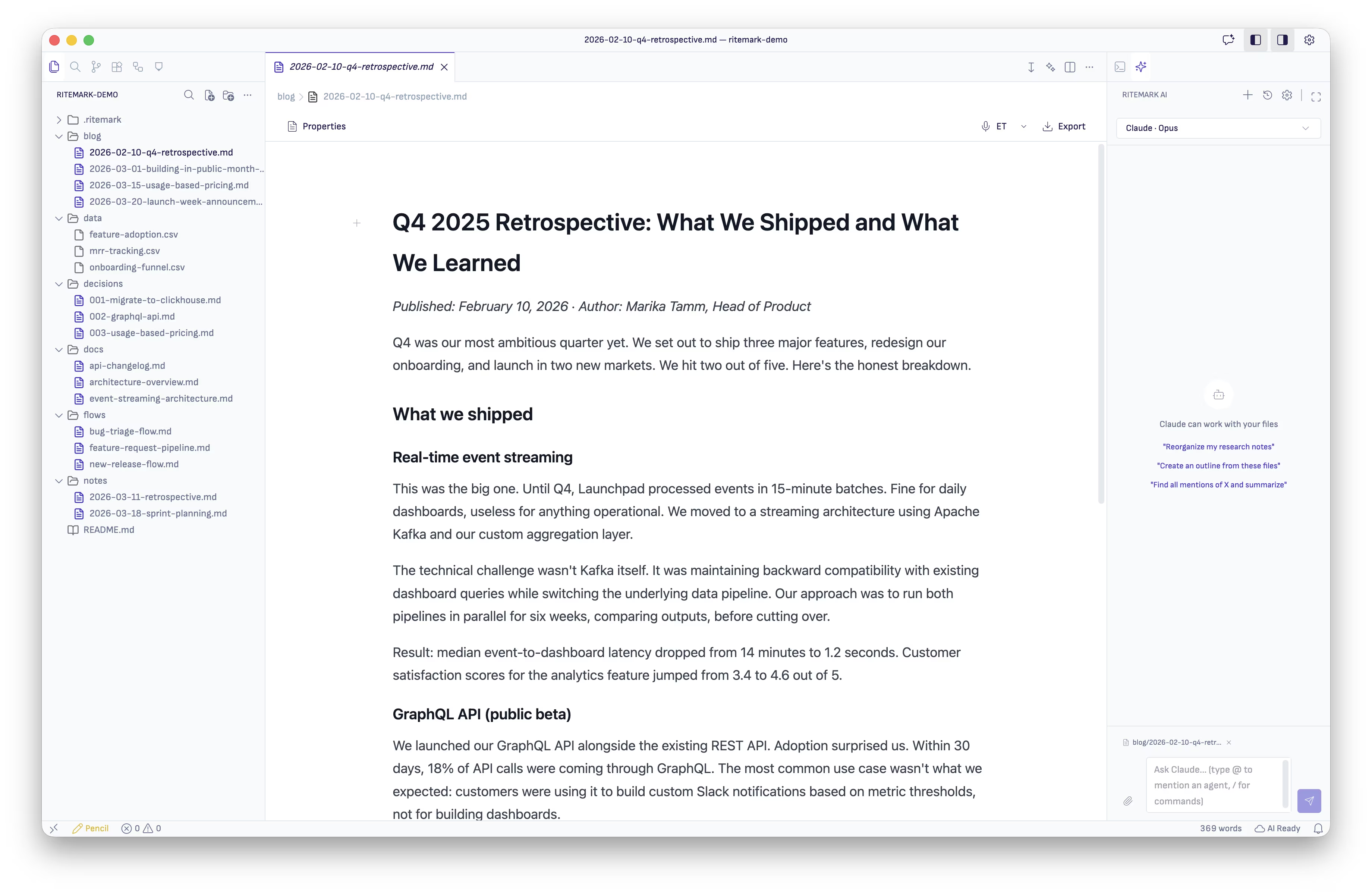
Ritemark keeps your document and your AI agent in the same window. You write on the left. The agent sits on the right, either as a visual sidebar chat or a full terminal. Both have access to your actual files.
Open a blank markdown file. Start dumping your customer call notes. When you're ready to structure them, tell the agent: "Read my notes and propose a PRD outline with user stories for each feature area." The agent reads the file you have open, not a copy you pasted, the actual file. It proposes a structure. You accept what works, edit what doesn't, and keep going.
When you get to acceptance criteria, the agent already knows what the user stories say because it read the whole document. When you ask it to check for missing edge cases, it has the full context. No "here's what I wrote so far" preamble needed.
A real workflow, start to finish
Monday morning. You have notes from three customer interviews and a Slack thread from engineering about technical constraints.
You create a new folder in Ritemark with a file for each: interview-notes.md, engineering-constraints.md, and prd-draft.md. Open the PRD draft and the AI sidebar, and choose Claude Code.
"Read the interview notes and engineering constraints files. Identify the top three feature requests that are technically feasible given the constraints. Draft the problem statement section of the PRD."
The agent reads all three files, cross-references them, and drafts a focused problem statement. You refine it. Then move to user stories, acceptance criteria, and scope. Each time, the agent works with the full project folder context.
By lunch, you have a draft PRD that engineering can actually review. Not because the AI wrote it for you, but because it helped you think through it faster while keeping all the context in one place.
Why this is different from a doc + ChatGPT
Three things matter for PM work in Ritemark:
Your files are markdown. They work in git, they render anywhere, they don't lock you into a proprietary format. When engineering wants to reference the PRD from their repo, it's already in a compatible format.
The AI agent reads your project folder. Not a pasted snippet, not a summary you wrote. The actual files. When your PRD references the technical constraints doc, the agent can check both.
Your files stay on your machine: customer interview notes, competitive analysis, pricing strategy. None of it goes through a cloud document service. When the agent reads those files, their content goes to the AI provider you chose, under your own account and its terms. Your laptop, your files, your control.
Start writing with Ritemark.
Free and open source.