The founder's writing stack is broken
Founders write constantly. Investor updates, board decks, strategy memos, competitive analysis, hiring plans. Most of it is sensitive. And most of it gets written in tools that aren't built for this kind of work.
You draft an investor update in Google Docs, then open ChatGPT to help phrase the revenue section. You paste in last quarter's numbers, ask for a narrative, copy the result back. The AI gave a decent draft, but it doesn't know your previous updates, your tone, your investor relationships. And you just sent your revenue numbers through a third-party service.
For competitive analysis, it's worse. You have notes in one place, the competitor's pricing page screenshots in another, your product roadmap somewhere else. Pulling it all together means dozens of tabs and a lot of manual context-setting every time you ask the AI for help.
Writing strategy with everything in one place
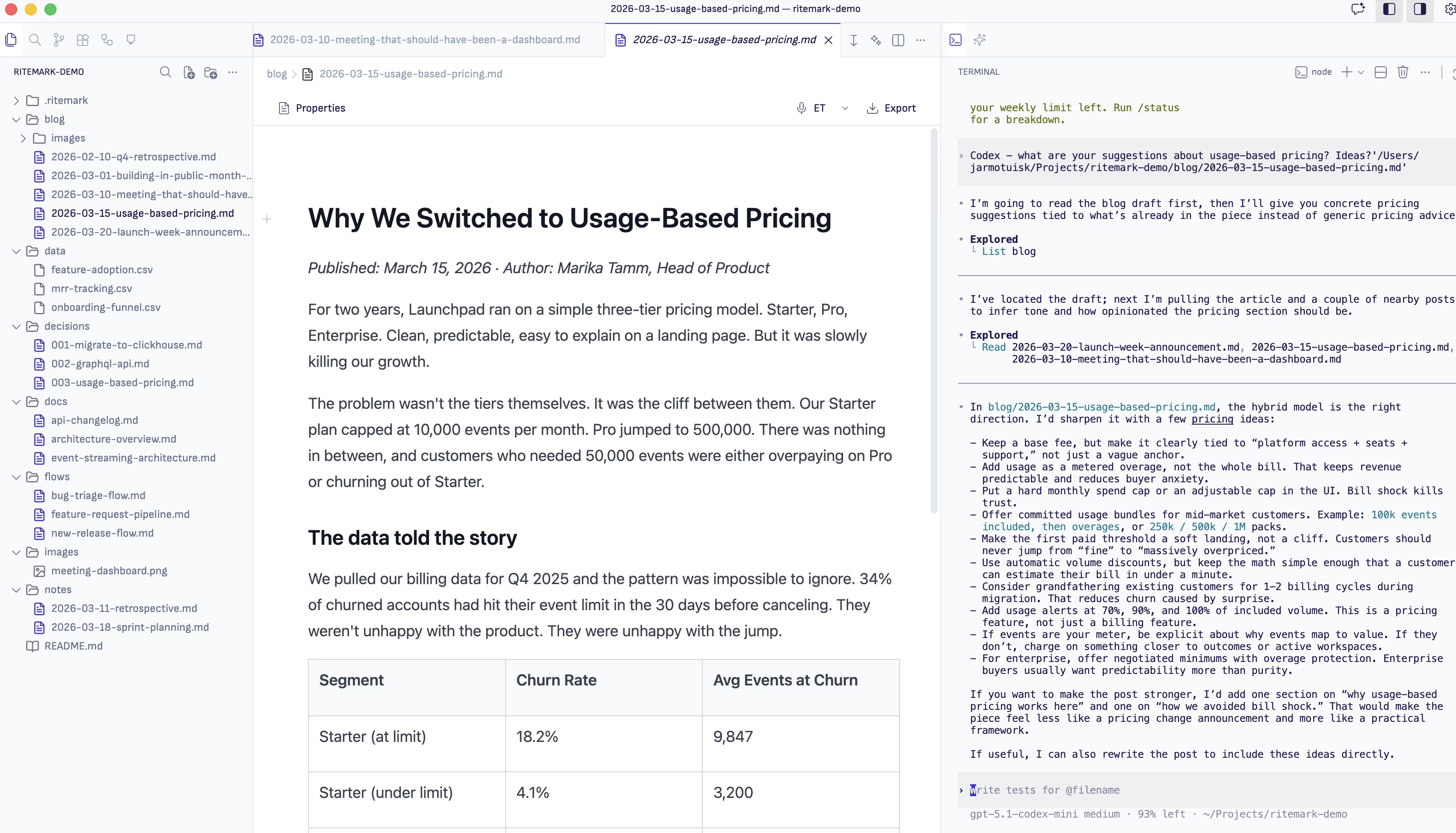
Ritemark puts your writing and your AI agent in the same workspace. Your files live on your machine. The agent reads them directly.
Create a folder for Q1 board materials. Put your financials summary, last quarter's update, and your product roadmap in markdown files. Open this quarter's update draft and the AI sidebar. The agent can reference every file in the folder when you ask it to.
"Compare this quarter's metrics with last quarter and draft the narrative for the growth section." The agent reads both files, spots the trends, and writes a draft that matches your actual numbers. You edit the tone, add the context only you know, and move on to the next section.
Investor updates that actually get better over time
The real advantage shows up over quarters. Your Q1 update is in the same folder as Q2, Q3, Q4. When you write next quarter's update, the agent can read every previous one. It picks up your writing style, your recurring themes, the metrics you track.
"Draft the product section following the same structure as last quarter, but highlight the three new features we shipped." The agent reads last quarter's product section, understands the format, and generates a draft that feels continuous, not like a fresh start.
No need to teach the AI your style every session. No pasting in "here's how I wrote it last time." The files are right there in the folder.
Competitive analysis without the tab chaos
You need to evaluate a new competitor. You create a markdown file for your analysis and drop your raw notes in: pricing observations, feature comparisons, positioning differences.
Open the AI sidebar and say: "Read my competitor notes and our product roadmap. Identify where we're stronger, where we're weaker, and what gaps matter most for our target customers."
The agent reads both files. It gives you a structured analysis based on your actual product capabilities, not generic advice. You refine it, add your market intuition, and you have a competitive brief you can share with the team.
Sensitive documents stay on your machine
This matters more for founders than almost anyone. Investor updates contain revenue numbers. Board decks contain strategic plans. Competitive analysis contains pricing intelligence. Hiring plans contain salary ranges.
Ritemark is local-first. Your files live on your hard drive. When the AI agent reads a file, its content goes to the AI provider you chose (Anthropic, OpenAI or another), under your own account and its terms. No cloud document service stores your board materials. No third-party tool indexes your competitive analysis.
When you close Ritemark, your strategy documents are where you left them: on your laptop, in your file system, under your control.
Start writing with Ritemark.
Free and open source.